

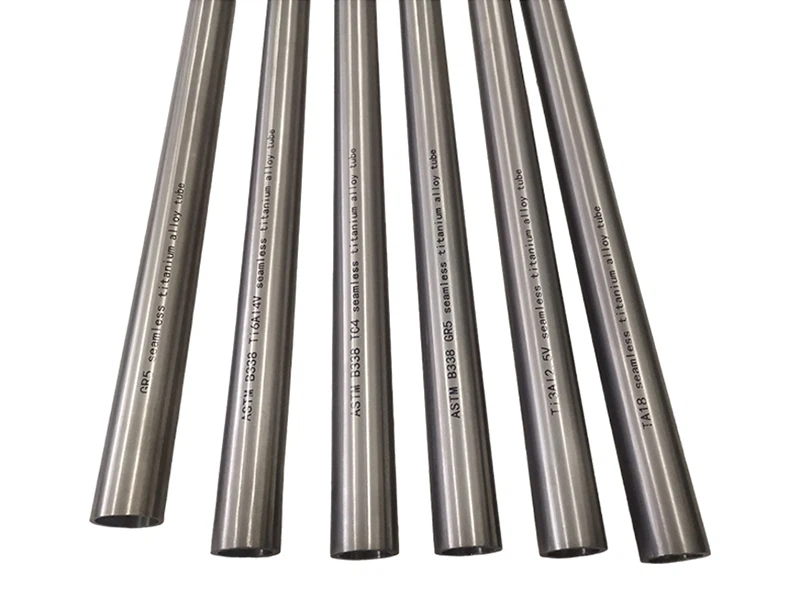
Jurui Metal Technology company is committed to the development and production of high-strength titanium alloy tubes in China. After 5 years of research and development, we have successfully overcome the difficulties of TC4(Gr5) Ti6Al4V titanium alloy tube processing, as one of the few manufacturers in the world, it has become one of the leading suppliers of TC4(Gr5) Ti6Al4V titanium alloy tubes in China and one of the top manufacturers of titanium alloy tubes.

Why choose us
Product Grades
We offer several grades of titanium alloy tubes, including TC4 (GR5 TI6Al4V), TA18 (Gr9), TA16 (Ti2.5Al2Zr), and TC11 (Ti6.5Al1.5Zr).
Production Equipment
Our production facility is equipped with an extruder, pipe rolling machine, annealing furnace, straightening machine, tube shrinking machine, drawing machine, and eddy current testing equipment.
Production Market
We serve markets in Australia, Russia, the USA, Germany, Japan, and South Korea.
Good Service
We provide high-quality after-sales service, including usage tracking and encouraging positive feedback. Our team responds rapidly within 24 hours.
Our Company
Jurui Metal Technology Co., Ltd. is located in Jiangyin, a water town in the south of the Yangtze River. As a global supplier of polyurethane wheels, polyurethane rollers, and other polyurethane products, Jurui Metal Technology is committed to creating added value for customers worldwide.
What is 7075 Aluminum Tube?
7075 aluminum alloy is a cold-treated forged alloy with high strength, far superior to mild steel. 7075 Aluminum is one of the strongest alloys on the market. General corrosion resistance, high mechanical properties, and anodic reaction. Smaller grains enable deeper drilling performance, higher tool wears resistance, and excellent thread rolling. Zinc is the main alloying element in 7075. Adding magnesium to the alloy containing 3%-7.5% zinc can form MgZn2 with a significant strengthening effect so that the heat treatment effect of the alloy is much better than that of the aluminum-zinc binary alloy. With the increase of zinc and magnesium content, the tensile strength of the alloy will further increase, but the resistance to stress corrosion and exfoliation corrosion will decrease.

6061 T6 Tube is a high-quality aluminum alloy tube that is extensively used in various industrial applications. This tube is manufactured from 6061 aluminum alloy which is an excellent material for manufacturing high-quality and durable products.

Aluminum alloys have become essential in various manufacturing processes due to their lightweight, corrosion resistance, and strength. One of the popular aluminum alloys is the 2xxx series, which has copper as its primary alloying element.

Welcome to our company, a leading manufacturer of Aluminum Alloys 5xxx Tube in China, with over 10 years of experience in producing and exporting high-quality products to merchants worldwide.

Aluminum Alloys 6xxx Tube is an essential product for various industries globally. The product has been widely used across several production industries due to its durability, high strength, and lightweight.

Aluminum Alloys 7xxx Tube is an essential product in various industries, including aerospace, automotive, and military sectors. The product is made using aluminum alloy 7xxx that consists of zinc as the primary alloying element.

As a leading manufacturer of high-quality aluminum alloy tubes in China, we are pleased to introduce our product to international merchants. Aluminum alloy tubes are widely used in various sectors, including building construction, automotive, aerospace, and marine industries.
We believe that an excellent team is the core driver of the aggregation and amplification effect of the enterprise, and it is the solid support for the company to become stronger, better and bigger.

One of the key features of the 7075 Aluminum Tube is its high strength-to-weight ratio. This tube is made from 7075 aluminum alloy, which is known for its exceptional strength and durability.

Our 6061 T6 Aluminum Tube is made from 6061 aerospace grade aluminum alloy, which is highly durable and resistant to wear, corrosion, and heat.
Advantages of 7075 Aluminum Tube
High Strength-to-Weight Ratio
The 7075 aluminum tube boasts an extraordinary strength-to-weight ratio, setting it apart from other materials in the steel and metal industry. It possesses one of the highest strength levels among aluminum alloys while maintaining a low density. This unique combination makes the this aluminum bar an ideal choice for applications demanding both high strength and lightweight properties. Industries such as aerospace, automotive, and sporting goods benefit greatly from this attribute, as it allows for the creation of robust yet lightweight components.
Excellent Corrosion Resistance
One of the standout features of the 7075 aluminum tube is its outstanding resistance to corrosion. This corrosion resistance is achieved by incorporating zinc into the alloy composition, which forms a protective oxide layer on the surface. The protective layer acts as a shield against environmental factors, ensuring the longevity and durability of products made from the aluminum bar. This attribute is particularly valuable when components are exposed to extreme conditions or corrosive environments.
Superior Machinability
Despite its high strength, the 7075 aluminum tube offers exceptional machinability. This characteristic facilitates more efficient machining processes, leading to faster production times and reduced costs. Manufacturers can easily cut, drill, mill, and turn the aluminum bar to precise dimensions. This makes it a preferred choice for precision machining applications. This property simplifies the manufacturing process while maintaining the integrity of the material's structural properties.
Good Thermal Conductivity
The 7075 aluminum tube exhibits good thermal conductivity, making it suitable for applications that require efficient heat dissipation. Industries that benefit from this property include those involved in heat transfer applications, such as heat sinks and heat exchangers. The excellent thermal conductivity of the alloy bar ensures optimal performance and prevents overheating in critical components, contributing to the overall reliability and efficiency of these systems.
Application of 7075 Aluminum Tube
Aerospace Applications
Aircraft Fuselage and Structural Components: The exceptional strength-to-weight ratio of 7075 tubes makes them ideal for constructing the fuselage, the backbone of an aircraft. These tubes provide the necessary structural integrity while minimizing weight, crucial for maximizing fuel efficiency and flight performance.
Wing Structures: Wing structures are subjected to immense aerodynamic forces during flight. 7075 t6 aluminum tubes offer the perfect balance of strength and weight, allowing for the construction of lightweight yet robust wings that can withstand demanding flight conditions.
Landing Gear Components: Landing gear components require high strength to handle the impact of landing and taxiing. 7075 aluminum tubes, due to their exceptional strength and fatigue resistance, are widely used in landing gear struts and other critical components.
Automotive Applications
Lightweight Chassis and Frames: Utilizing 7075 aluminum tubes in chassis and frame construction allows car manufacturers to achieve significant weight reduction without compromising on strength. This contributes to improved fuel efficiency and overall performance.
Heat Exchangers: 7075 aluminum tubes find application in automotive heat exchangers due to their excellent thermal conductivity. This property allows for efficient heat transfer, vital for maintaining optimal engine temperature and performance.
Engine Components: Due to their strength-to-weight ratio and machinability, 7075 aluminum tubes can be found in various engine components, such as pistons and connecting rods. Their use helps reduce engine weight without sacrificing the required strength and durability.
Applications in Sporting Goods
Bicycle Frames: High-performance bicycles often utilize 7075 aluminum tubes for their frames due to the superior strength-to-weight ratio, allowing for lightweight and responsive bikes without compromising on durability.
Archery Equipment: The exceptional strength and stiffness of 7075 aluminum tubes make them ideal for constructing arrow shafts and certain bow components, ensuring accuracy and consistency in archery applications.
Ski Poles: Lightweight and robust, 7075 aluminum tubes are commonly used in high-end ski poles, providing skiers with the necessary support and control while minimizing weight for improved maneuverability.
Marine Applications
Boat Masts and Rigging: The masts and rigging of sailboats require exceptional strength and resistance to corrosion. 7075 aluminum tubes, boasting both attributes, are widely utilized in these components, ensuring safe and efficient sail operation.
Hull Construction: In some boat designs, particularly high-performance vessels, 7075 aluminum tubes may be used in specific sections of the hull. Their lightweight nature contributes to improved speed and maneuverability.
Marine Engine Parts: Similar to the automotive industry, certain marine engine components benefit from the use of 7075 aluminum tubes. Their strength and machinability allow for the creation of lightweight yet robust components, contributing to improved engine performance and efficiency.
High-Performance Equipment
Firearms Components: Specific components of firearms, such as receivers, barrels, and handguards, can be manufactured using 7075 T6 aluminum tubes. This temper designation offers even greater strength and durability compared to the standard 7075 alloys, making it suitable for these demanding applications. However, it is crucial to note that the use of 7075 aluminum tubes in firearms is subject to various regulations and legal restrictions depending on the firearm type and local laws.
High-Pressure Gas Cylinders: Due to their exceptional strength and resistance to corrosion, 7075 T6 aluminum tubes are utilized in the construction of high-pressure gas cylinders used for various industrial and recreational purposes. These cylinders can safely store and transport compressed gases like oxygen, nitrogen, and helium.
Industrial Machinery: 7075 aluminum tubes contribute to the construction of various components in high-performance industrial machinery. Their strength-to-weight ratio allows for lightweight yet robust machine parts, improving overall efficiency and performance.
How to Distinguish 6061 and 7075 Aluminum Tubes?
The 6000 series represents 6061, which mainly contains magnesium and silicon, and is suitable for applications requiring high corrosion resistance and oxidation resistance. Good usability, excellent interface characteristics, easy coating, and good workability. Can be used on low voltage weapons and aircraft joints.
General characteristics of 6061: Excellent interface characteristics, easy coating, high strength, good usability, and strong corrosion resistance.
Typical uses of 6061 aluminum: Aircraft parts, camera parts, couplers, marine accessories and hardware, electronic accessories and joints, decorative or various hardware, hinge heads, magnetic heads, brake pistons, hydraulic pistons, electrical accessories, valves and valve parts .
7000 series represents 7075 which mainly contains zinc. It also belongs to the aviation series. It is an aluminum-magnesium-zinc-copper alloy, a heat-treatable alloy, and a super-hard aluminum alloy with good wear resistance.
The 7075 aluminum tube is stress-relieved, and will not deform or warp after processing. All super-large and ultra-thick 7075 aluminum tubes are ultrasonically detected, which can ensure no blisters and impurities.
7075 aluminum tube has high thermal conductivity, which can shorten the forming time and improve work efficiency. The main feature is high hardness. 7075 is an aluminum alloy with high hardness and high strength, which is often used in the manufacture of aircraft structures and futures. It requires high-strength structural parts and mold manufacturing with high strength and strong corrosion resistance.
Essential Personal Protective Equipment (PPE) for 7075 Aluminum Tube Welding
Eye Protection
Auto-darkening welding helmet: This helmet automatically adjusts the shade level of the visor based on the intensity of the welding arc. For 7075 aluminum tube welding, a shade level between 10 and 12 is typically recommended.
Safety glasses: These are essential for protecting your eyes during grinding, cleaning, and other pre-welding activities. Ensure they comply with the American National Standards Institute (ANSI) Z87.1 standard for impact resistance.
Respiratory Protection
Air-purifying respirator (APR): An APR equipped with appropriate cartridges specifically designed for 7075 aluminum tube welding fumes is crucial. These cartridges typically contain activated carbon and other filtration materials to absorb harmful contaminants.
Proper fit and filter selection: Consult with a safety professional to ensure the selected respirator fits correctly and the filters provide adequate protection for the specific type of 7075 aluminum tube welding fumes encountered.
Skin and Body Protection
Fire-resistant leather gloves and sleeves: These offer protection from heat, sparks, and spatter during the welding process.
Flame-retardant clothing: Wear long pants and long-sleeved shirts made from flame-retardant materials like cotton or wool blend fabrics.

How Strong Is 7075 Aluminum Tube?
7075 wrought aluminum grades have a maximum tensile strength of greater than 572 MPa with a density of 2.8 g/cm3. 304-grade stainless steel, on the other hand, has a tensile strength of 621 MPa and a density of 8 g/cm3. So 7075 aluminum tube has 90 % of the strength of 304 stainless steel and ~ 1/3 of the weight. An equivalent weight of 7075 is therefore nearly three times the strength of an equal mass part made from 304 stainless steel.

What Is the Operating Temperature Range for 7075 Aluminum Tube?
The operating temperature range for 7075 aluminum tube should not go above 100 °C. Its yield strength degrades severely above 100 °C and diminishes by 30 % at 150 °C, so it is not suited to high-stress applications at elevated temperatures. 7075 alloys are considered suitable for cryogenic use, however. Although some loss of strength and embrittlement will occur, these can be considered design factors rather than a cause for exclusion.
Are There Design Issues to Note for the 7075 Aluminum Tubes in High-Pressure Projects?
You need to be particular about the design elements if the 7075 seamless tube is for a high-pressure application. These design considerations are paramount to the safety and functionality of the system in question, given the high pressure involved. Apart from the dimensions and the material of the tube, the seamless tube is also crucial. We have varying outside diameters and wall thicknesses for the 7075 aluminum seamless tube. We have these variations because we know that the specific combination of these two parameters is essential to the integrity of a tube and the system as a whole. The 7075 aluminum is strong, but a project may have specific property requirements, which can tempers of the alloy may address. To prevent weak points in the material, ensure that the manufacturer employs stringent quality control that rules out any flaws in the material.

Welding Process Considerations for 7075 Aluminum Tubes
Welding Process Selection
Tungsten Inert Gas (TIG) welding: This process, also known as Gas Tungsten Arc Welding (GTAW), is a popular choice for 7075 aluminum tube welding due to its precise control and high-quality welds. TIG welding utilizes a non-consumable tungsten electrode and a separate filler metal rod to create the weld.
Metal Inert Gas (MIG) welding: This process, also known as Gas Metal Arc Welding (GMAW), is another option for 7075 aluminum tube welding. MIG welding utilizes a continuously fed consumable electrode that also acts as the filler metal. While offering faster welding speeds compared to TIG, MIG welding can be more challenging to achieve high-quality welds on aluminum due to the potential for porosity (gas bubbles trapped in the weld metal).
Shielding Gas Selection
Inert gas plays a critical role in protecting the molten weld pool from contamination by atmospheric gases like oxygen and nitrogen. These gases can cause porosity and weaken the weld.
Argon is the most commonly used shielding gas for aluminum welding due to its inert properties. In some cases, a small amount of helium may be added to the argon to improve arc characteristics and travel speed.
Comparing the Characteristics of 7075 Aluminum Tube VS 6061 Aluminum Tube
1. How Strong Are They?
When looking at both alloys in the "T6 condition" (meaning that the material is heat-treated with a solution, then it is aged), it's noticeable that 7075 T6 aluminum tube properties feature a tensile strength that is nearly double that of 6061 T6 aluminum tube properties. The shear strength of 7075-T6 is estimated to be 1.5 times that of 6061-T6. 7075 T6 aluminum tube is substantially harder as well.
2. Can You Machine Them?
The machinability of a material is a measure of how it reacts to machining procedures such as milling, cutting, die-casting, and more. Both of these alloys can be machined without much trouble, but 6061 aluminum tube is the preferred choice if machinability is desired. 6061 aluminum tube is believed to have good machinability, while 7075 aluminum tube would be rated as fair.
3. Can They Be Formed and Welded?
With the presence of magnesium with silicon as its principal alloying elements, 6061 aluminum tube has good formability and weldability. 7075 aluminum tube, as a much harder material with a higher zinc content, is not as conducive to forming and welding. However, in the annealed condition, this grade can be formed and heat-treated if necessary, as well as welded in place.
4. How Corrosion Resistant Are They?
When exposed to air or water, 6061 aluminum tube alloy forms a layer of oxide which renders it nonreactive with elements that are corrosive to the underlying metal. However, due to the copper content of 6061, it is slightly less resistant to corrosion than other alloy types. Some corrosive effects can be removed entirely by coating the 6061 aluminum tube alloy with a protective layer.
5. Can They Be Anodized?
Anodizing is an electrochemical process that converts the metal surface into a decorative, durable, corrosion-resistant, anodic oxide finish. 6XXX Series alloys like 6061 aluminum tube are excellent candidates for anodizing. The oxide layer that follows the anodizing process is transparent and offers excellent protection. 7075 aluminum tube also takes to the anodizing process very well. The subsequent oxide layer is clear and offers great protection. If the zinc level becomes excessive, however, the oxide layer created by anodization can turn brown.
Our Certifications
GJB9001C-2017


Ultimate FAQ Guide to 7075 Aluminum Tube
Hot Tags: 7075 aluminum tube, China 7075 aluminum tube manufacturers, aluminum piping, aluminum alloy welded tube, aluminum alloy tube for plumbing, aluminum alloy tube for construction, precision aluminum alloy tube, aluminum alloy tube for residential use